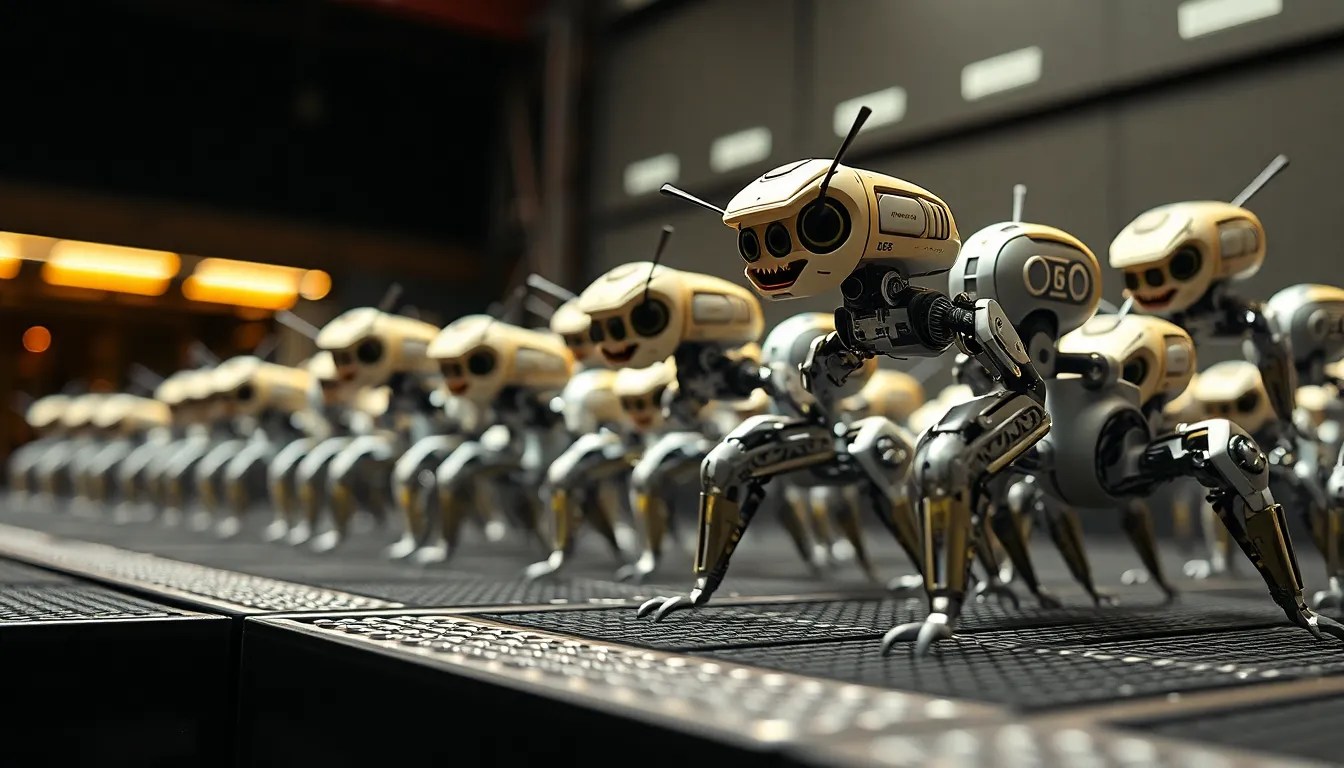
Swarm Robotics: The Future of Autonomous Problem Solving
I. Introduction
Swarm robotics is an emerging field of robotics that leverages the principles of swarm intelligence observed in nature. Defined as the coordination of multiple robots to perform tasks collectively, swarm robotics emphasizes autonomy, enabling robots to operate without centralized control.
The importance of autonomy in problem-solving cannot be overstated. With the ability to adapt, learn, and collaborate, these robotic swarms can tackle complex challenges efficiently. This article will delve into the advancements in swarm robotics, explore its implications across various fields, and consider its future potential.
II. The Principles of Swarm Robotics
Swarm robotics draws inspiration from natural phenomena seen in social insects like ants and bees, as well as schools of fish. These organisms demonstrate remarkable coordination and problem-solving abilities despite lacking centralized control. The principles of swarm robotics can be distilled into several key characteristics:
- Decentralization: Each robot operates independently, making decisions based on local information.
- Self-organization: Robots can adapt their behaviors based on environmental changes and the actions of their peers.
- Scalability: The system can be expanded by adding more robots without significant changes to the overall operation.
In contrast to traditional robotics, which often relies on centralized control and pre-programmed instructions, swarm robotics offers a more flexible and resilient approach to problem-solving.
III. Technological Advances Driving Swarm Robotics
Several technological advancements are propelling the growth of swarm robotics:
- Innovations in Artificial Intelligence and Machine Learning: These technologies enable robots to learn from their experiences, improving decision-making and adaptability in dynamic environments.
- Developments in Communication Protocols: Enhanced communication methods among robots allow for faster data exchange and coordination, essential for effective swarm operation.
- Enhanced Sensors and Hardware Capabilities: Advancements in sensors provide robots with improved perception of their surroundings, while more powerful hardware allows for complex computations and real-time processing.
IV. Applications of Swarm Robotics
The versatility of swarm robotics leads to a wide array of applications across different sectors:
- Environmental Monitoring and Disaster Response: Swarm robots can be deployed for real-time data collection in disaster zones, assessing damage and delivering supplies.
- Agriculture and Precision Farming: In agriculture, swarms can monitor crop health, optimize irrigation, and even automate planting and harvesting processes.
- Search and Rescue Operations: During emergencies, swarm robots can cover large areas quickly, locating survivors and mapping out disaster sites.
- Industrial Automation and Logistics: Swarm robotics can enhance warehouse operations, optimizing inventory management and improving supply chain efficiency.
V. Challenges and Limitations
Despite its potential, swarm robotics faces several challenges:
- Technical Challenges: Coordinating a large number of robots poses difficulties in terms of synchronization and control, especially in dynamic environments.
- Ethical Considerations: The autonomous decision-making capabilities of swarm robots raise ethical questions about accountability and the consequences of their actions.
- Limitations in Current Technology: While progress is being made, current hardware and software limitations can hinder the scalability and effectiveness of swarm systems.
VI. Future Prospects of Swarm Robotics
The future of swarm robotics is promising, with several potential developments on the horizon:
- Enhanced Efficiency: As technologies improve, swarm robots are expected to achieve greater efficiency in problem-solving, capable of tackling increasingly complex tasks.
- Integration with IoT and Smart Cities: The combination of swarm robotics with the Internet of Things (IoT) could lead to smarter urban environments, optimizing resource management and public services.
- Predictions for Evolution: Future advancements may see swarm robotics applied in healthcare, transportation, and even space exploration, expanding their role in society.
VII. Case Studies and Real-World Implementations
Numerous successful projects have demonstrated the capabilities of swarm robotics:
- Robotic Ants: Researchers have developed robotic ants that mimic the foraging behavior of real ants, successfully navigating complex environments to find food sources.
- Swarm Drones: Drones working in swarms have been used for environmental monitoring, effectively covering large areas to collect data on wildlife and vegetation.
- Autonomous Agricultural Robots: In precision farming, fleets of small robots have been deployed for tasks such as planting, watering, and harvesting crops, showcasing significant improvements in yield and efficiency.
These case studies illustrate the practical applications of swarm robotics, providing insights and lessons for future research and development.
VIII. Conclusion
In conclusion, swarm robotics represents a significant advancement in autonomous problem-solving. By mimicking the collective behavior of natural swarms, these robotic systems offer innovative solutions across various fields, from agriculture to disaster response.
As we look ahead, it is crucial to invest in research and development in swarm technology to unlock its full potential. The integration of swarm robotics into our daily lives could reshape industries and enhance our ability to solve complex challenges, paving the way for a smarter, more efficient future.


