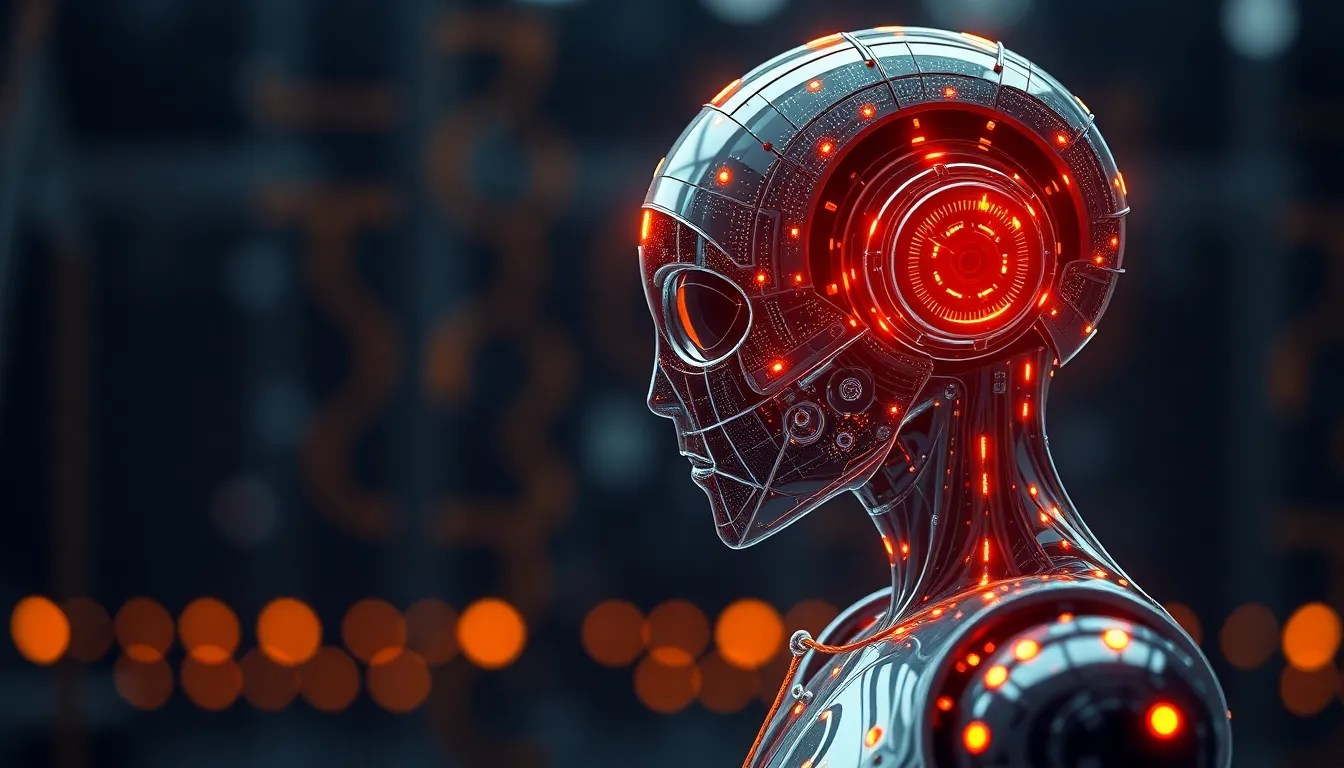
The Future of Robotics: Integrating Sensor Data for Enhanced Intelligence
I. Introduction
Robotics refers to the branch of technology that deals with the design, construction, operation, and application of robots. It plays a crucial role in modern society by automating processes, enhancing productivity, and improving the quality of life. As technology advances, robots are becoming more sophisticated, capable of performing complex tasks that require a level of intelligence previously thought to be exclusive to humans.
Sensor technology serves as the backbone of robotic intelligence, providing robots with the capability to perceive their environment and make informed decisions based on real-time data. This article aims to explore how the integration of sensor data is enhancing the intelligence of robots, paving the way for smarter, more autonomous machines.
II. The Evolution of Robotics
The journey of robotics has been marked by several historical milestones. Initially, robots were simple machines designed for repetitive tasks in manufacturing. Over time, advancements in technology have led to the development of more complex systems capable of learning and adapting to new situations.
The transition from basic automation to intelligent robotics can be traced through key developments:
- The invention of the first industrial robot, Unimate, in the 1960s.
- The introduction of programmable logic controllers (PLCs) in the 1970s.
- The emergence of artificial intelligence and machine learning in the 1990s.
Today, robotics technology encompasses a wide range of applications, from industrial automation to personal assistance, signifying a remarkable evolution in capabilities and functionalities.
III. Understanding Sensor Data
In robotics, sensors play a vital role in gathering information from the environment. Various types of sensors are utilized, each serving a specific purpose:
- Lidar: Light Detection and Ranging sensors help in mapping and navigation by measuring distances using laser light.
- Cameras: Vision sensors provide visual information, enabling robots to recognize objects, track movement, and interpret scenes.
- Inertial Measurement Units (IMUs): These sensors measure the velocity, orientation, and gravitational forces acting on the robot, aiding in stability and navigation.
The role of sensor data extends beyond mere collection; it is essential for environmental perception. Robots rely on accurate sensor data to navigate, avoid obstacles, and interact with their surroundings. Furthermore, real-time data processing is crucial, as it enables robots to react swiftly to changes in their environment, enhancing their overall intelligence.
IV. Integrating Sensor Data for Enhanced Intelligence
Integrating data from various sensors is a complex task that requires advanced techniques. Sensor fusion is one such technique that combines data from multiple sensors to produce a more accurate and comprehensive understanding of the environment.
Machine learning and artificial intelligence play a pivotal role in processing sensor data. By employing algorithms that learn from data, robots can improve their decision-making capabilities over time. Some notable methods include:
- Deep learning for image and video analysis.
- Reinforcement learning for navigation and path planning.
- Probabilistic models for sensor fusion and state estimation.
Several case studies highlight the successful integration of sensor data in robotics. For instance, autonomous vehicles utilize a combination of Lidar, cameras, and radar to navigate complex environments, demonstrating the power of sensor integration in real-world applications.
V. Applications of Intelligent Robotics
The integration of sensor data has led to significant advancements in various sectors, including:
- Industrial automation and manufacturing: Robots equipped with sensors can monitor production lines, perform quality control, and adapt to changing conditions.
- Healthcare and surgical robotics: Surgical robots use precise sensor data to assist in complex procedures, improving outcomes and reducing recovery times.
- Autonomous vehicles and drones: These machines rely heavily on sensors to navigate, avoid obstacles, and make real-time decisions.
- Robotics in agriculture and environmental monitoring: Sensors enable robots to monitor crops, assess soil conditions, and collect environmental data, optimizing agricultural practices.
VI. Challenges in Sensor Data Integration
Despite the advancements in robotics, several challenges remain in the integration of sensor data:
- Technical challenges: Issues such as data accuracy, sensor calibration, and processing speed can hinder performance.
- Ethical considerations: The use of sensors raises privacy and security concerns, particularly in applications like surveillance and personal data collection.
- Overcoming limitations: Hardware and software limitations can restrict the capabilities of robots, necessitating ongoing research and development.
VII. Future Trends in Robotics and Sensor Technology
The future of robotics and sensor technology is promising, with several innovations on the horizon:
- Development of advanced sensors that can operate in diverse environments.
- Advancements in AI algorithms that enhance learning and adaptability.
- Integration of robotics with IoT (Internet of Things) for smarter systems.
Predictions for the next decade in robotics include increased automation across industries, the rise of collaborative robots (cobots) working alongside humans, and significant improvements in autonomous systems. These advancements have the potential to transform various industries and society as a whole.
VIII. Conclusion
In summary, the integration of sensor data is crucial for enhancing robotic intelligence. As robots become more capable of understanding and interacting with their environments, their transformative potential for industries and everyday life grows exponentially. Continued research and development in this field are essential for overcoming existing challenges and unlocking the full capabilities of intelligent robotics.
To harness the benefits of this technological revolution, stakeholders in academia, industry, and government must collaborate and invest in the future of robotics and sensor technologies. The journey towards smarter, more autonomous machines is underway, and the possibilities are limitless.


