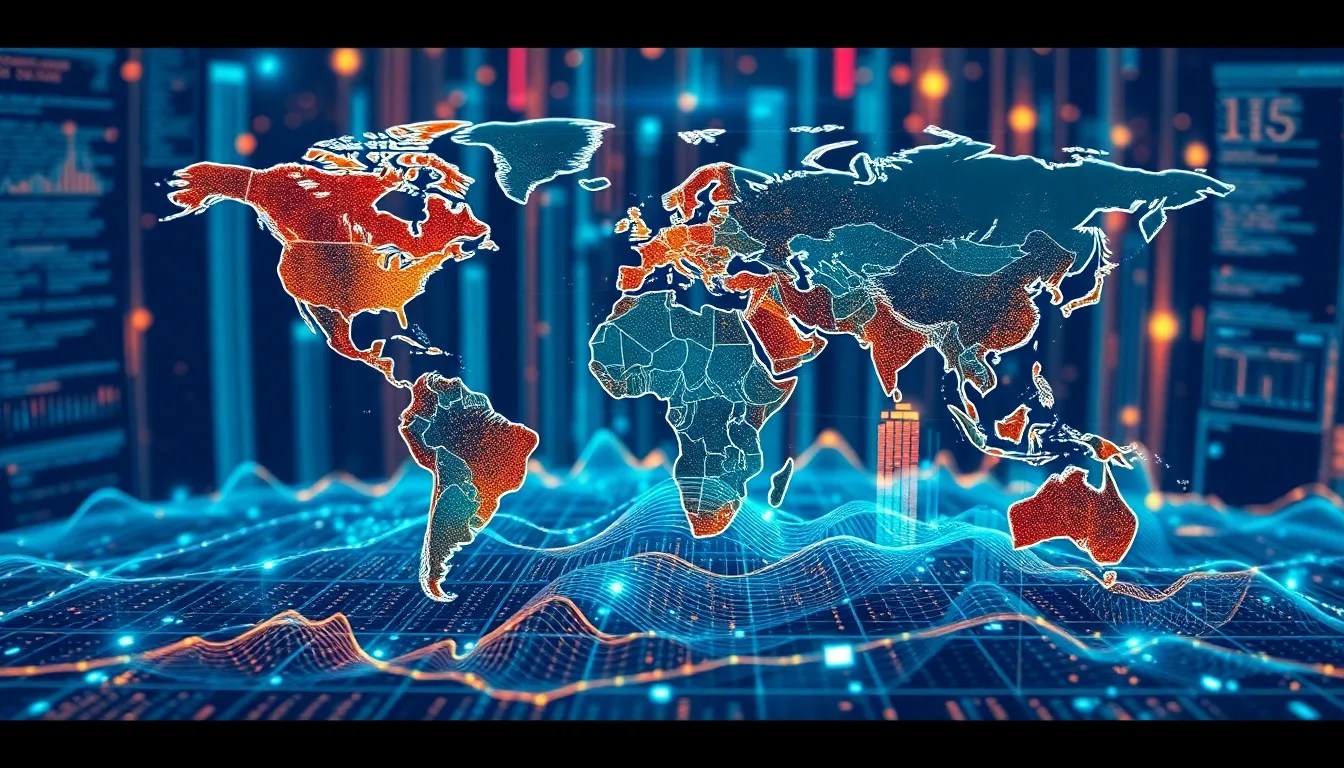
Visualizing the Impact of Globalization: Data Representation in Economics
I. Introduction
Globalization refers to the process by which businesses, cultures, and economies become integrated on a global scale. This phenomenon has significantly reshaped the modern economy, influencing everything from trade patterns to labor markets. As nations become increasingly interconnected, understanding the nuances of globalization becomes imperative for economists, policymakers, and businesses alike.
Data representation plays a crucial role in unpacking the complexities of economic globalization. By visualizing data, stakeholders can glean insights that may not be immediately apparent through traditional analytical methods. This article will explore the importance of data in understanding globalization, delve into various visualization techniques, and discuss the impact of technology on data representation.
II. The Role of Data in Globalization
To effectively analyze globalization, it is essential to consider various types of data that depict economic interactions. This includes:
- Trade Data: Information regarding exports and imports, tariffs, and trade balances.
- Investment Data: Cross-border investments, foreign direct investment (FDI), and portfolio investments.
- Labor Data: Migration patterns, labor market dynamics, and workforce demographics.
- Financial Data: Currency exchange rates, stock market trends, and international debt levels.
The sources of economic data are diverse, encompassing:
- Government reports and statistics.
- International organizations such as the World Bank and IMF.
- Private sector analyses and market research firms.
However, collecting and standardizing global economic data presents significant challenges, including discrepancies in data collection methods across countries, differing definitions of economic metrics, and the inherent difficulty of capturing informal economies.
III. Visualization Techniques in Economic Data Representation
Effective data visualization is paramount for conveying complex economic information clearly and concisely. Common visualization tools include:
- Graphs and Charts: Bar graphs, line charts, and pie charts that summarize data trends and distributions.
- Infographics: Visual representations that combine graphics and data to convey information at a glance.
Advanced visualization methods have emerged, such as:
- Geospatial Mapping: Visualizing data on geographical maps to illustrate regional economic patterns.
- Interactive Dashboards: Tools that allow users to manipulate data views and explore various economic indicators in real-time.
Case studies highlight the effectiveness of data visualization in contexts like international trade analysis, where visual tools can illustrate shifts in trade flows and tariff impacts.
IV. The Impact of Visualization on Economic Analysis
Visualization significantly aids in identifying trends and patterns within economic data. By transforming complex datasets into accessible visual formats, analysts can:
- Quickly spot anomalies and trends that require further investigation.
- Facilitate comparative analyses between different countries or time periods.
Moreover, clear visual data enhances decision-making processes for policymakers and businesses, allowing them to make informed choices based on empirical evidence. However, it is crucial to remain aware of the limitations and potential misinterpretations of visual data, as misleading representations can lead to erroneous conclusions.
V. The Role of Technology in Data Visualization
Emerging technologies are revolutionizing the field of data representation. Key innovations include:
- Artificial Intelligence: AI algorithms can analyze vast datasets, identifying trends and generating visualizations automatically.
- Machine Learning: These techniques improve the accuracy of predictions and visualizations based on historical data.
- Big Data Analytics: Tools that manage and process large datasets enable comprehensive analysis and visualization of complex economic interactions.
Several software platforms, such as Tableau, Microsoft Power BI, and Google Data Studio, are driving innovation in economic visualization, allowing users to create compelling visual narratives from economic data.
Future trends may include greater integration of augmented reality (AR) and virtual reality (VR) in data visualization, providing immersive experiences that enhance understanding of economic data.
VI. Case Studies: Successful Applications of Data Visualization in Globalization
Numerous successful applications of data visualization highlight its effectiveness in understanding globalization:
- International Trade Analysis: Visual tools have been employed to track trade flows and assess the impact of tariffs on different sectors.
- Tracking Global Supply Chains: Visualization techniques are used to map and analyze complex supply chains, revealing vulnerabilities and efficiencies.
- Labor Migration Patterns: Data representation helps visualize migration trends, understanding the socio-economic factors driving labor movement across borders.
VII. Ethical Considerations in Data Visualization
As with any field involving data, ethical considerations are paramount in data visualization:
- Data Privacy and Security: Protecting sensitive economic data is crucial, particularly when visualizing personal information.
- Transparency and Accuracy: Ensuring that visualizations accurately represent the underlying data is essential to maintain trust.
- Addressing Bias: Care must be taken to avoid misrepresentation, which can skew public perception and policy decisions.
VIII. Conclusion
In conclusion, visualizing economic globalization is vital for understanding the interconnectedness of modern economies. As data representation techniques evolve, they will play an increasingly important role in guiding policy and business decisions. Researchers and policymakers are encouraged to embrace advanced visualization techniques to better interpret global economic trends and drive informed decision-making.


